Climbing Mount Fuji for Sunrise — A Solo Hiker’s Honest Experience
🌅 The Sunrise That Makes the Climb Worth Planning
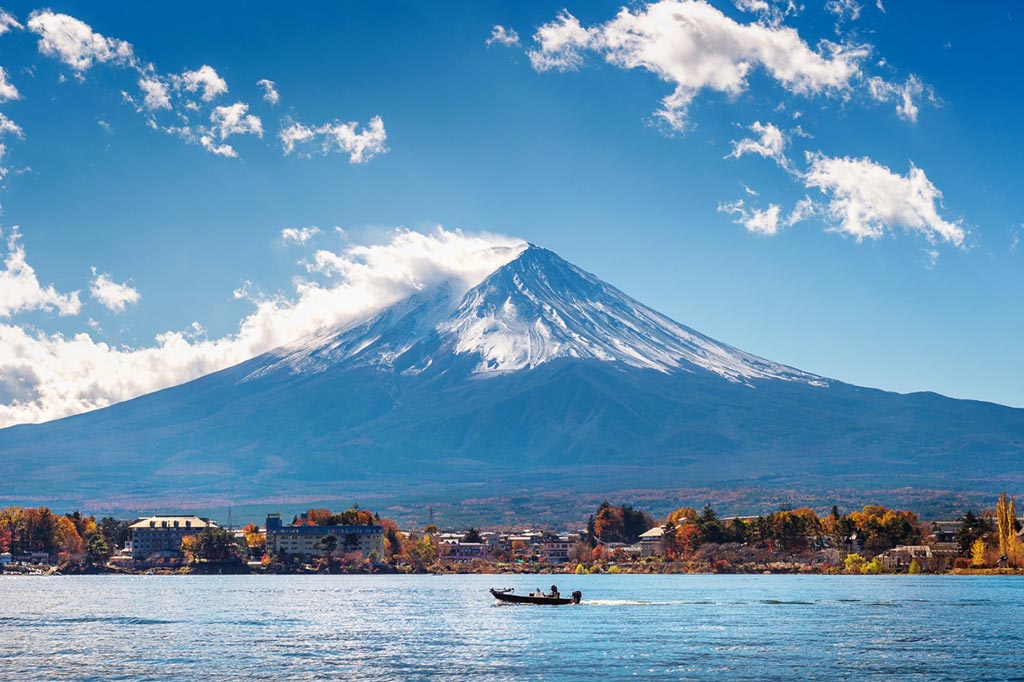
Mount Fuji rises to 3,776 metres and is one of Japan’s most recognizable natural landmarks. For travelers who want to experience the mountain at sunrise, climbing before dawn can be an unforgettable part of a Japan itinerary—but it also requires considerably more preparation than a normal sightseeing trip.
Higher sections of the mountain can be extremely cold and windy, even when conditions at the base feel comfortable. As the altitude increases, temperatures drop and the thinner air can make the climb physically demanding. Proper layers, suitable footwear, water, food, and enough time for the ascent are therefore important.
🥾 Starting the Climb
Most climbers use one of Mount Fuji’s established trails and begin their ascent from one of the mountain’s trail stations. The exact experience depends on the route, starting point, season, weather, and planned timing.
Travelers hoping to reach a higher station or the summit around sunrise need to plan their timing carefully. Starting too late can create unnecessary pressure, while moving too quickly at altitude can make the climb more difficult.
Weather conditions are another major consideration. Strong winds, cold temperatures, rain, and poor visibility can significantly change the experience, so checking official mountain information before setting out is essential.
🌄 The Sunrise Experience
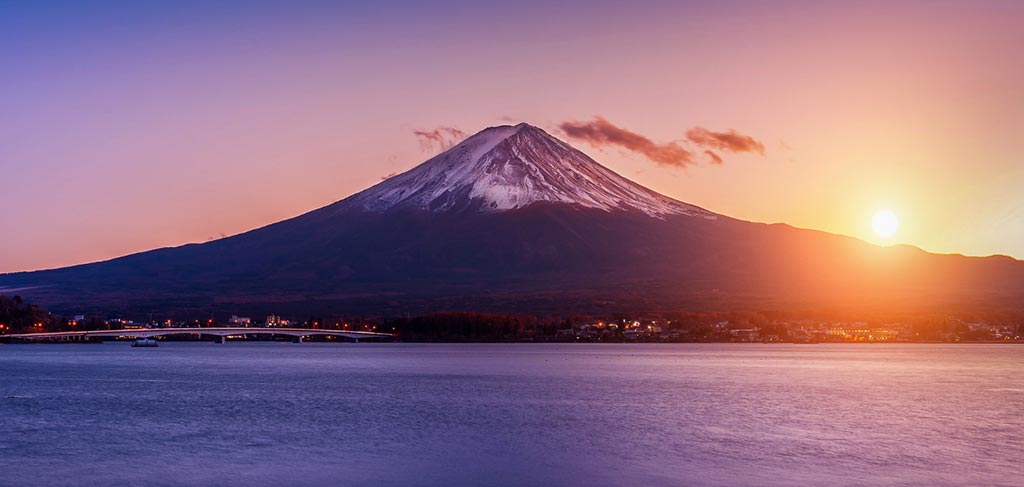
One of the main reasons travelers attempt a pre-dawn Mount Fuji climb is the changing sky above the surrounding landscape. Darkness gradually gives way to shades of purple, pink, and orange as the horizon becomes brighter.
From an elevated position, the sunrise can reveal layers of mountains and clouds below, creating a dramatic contrast with the dark silhouette of Mount Fuji itself.
However, sunrise is never guaranteed to look the same. Cloud cover, wind, visibility, and weather conditions can completely change what climbers see on a particular morning.
🎒 What to Prepare Before Climbing Mount Fuji
A sunrise climb requires more than simply reaching the mountain. Travelers should check the official climbing season, trail conditions, weather forecast, mountain rules, transportation options, and available facilities before planning the ascent.
Warm clothing is particularly important because conditions near the upper sections can be much colder than expected. It is also wise to allow enough time for rest and avoid treating the climb as a race.
Mount Fuji can certainly provide a memorable sunrise experience, but the most important part of the journey is arriving prepared. With realistic timing, appropriate equipment, and careful attention to mountain conditions, travelers can focus less on the difficulties of the climb and more on the remarkable landscape waiting above the clouds.
“Some experiences are so vast, so privately yours, that you need no one to witness them for them to be real.”
Quick Travel Snapshot
📍
Location
Shizuoka / Yamanashi, Japan
💴
Budget Range
$100–$230
📅
Best Time
July – Early September
⏳
Duration
2–3 Days Total
🧗
Difficulty
Moderate–Hard
🗣️
Solo-Friendly
100% Yes
Tokyo to Fuji: The Night Train, the Nerves, and the Noodles
I’d been in Tokyo for four days, drunk on convenience store onigiri and the city’s electric, never-sleeping hum, when I decided — impulsively, characteristically — that I needed to climb Mount Fuji before I left Japan. It was a Tuesday. The climb was Thursday.
I took the Fujikyu Railway from Shinjuku, watching the city dissolve into rice paddies and low mountains, and felt that specific solo traveler feeling — part terror, part pure freedom. No one knew where I was. No one was waiting. I could turn around if I wanted. I didn’t want to.
I stayed my first night in Fujiyoshida city, about 45 minutes from the Fujisan station. The guesthouse was tiny, run by a grandmother who left a thermos of green tea outside my door without being asked. I sat by my window that night eating a bowl of hōtō noodles from a vending machine restaurant nearby, watching the dark silhouette of Fuji — no snow yet visible in the August heat — and I felt the mountain watching back.
Guesthouse / Hostel — Fujiyoshida Base Town
I booked my first night at a charming local guesthouse through Booking.com — private room, shared kitchen, and a 5-min walk to the bus stop. Perfect for pre-climb nerves and cheap convenience store runs at midnight.
Click here to book your Hotel.
Traditional Machiya near Fuji Five Lakes
If you want atmosphere — and you do — the stays around Kawaguchiko Lake have traditional tatami rooms with direct Fuji views. A comfortable choice for a recovery night after the climb.
Click here to see the best options for you.
The Climb That Almost Broke Me (And Rebuilt Me)
Station 5 to Station 8 — The Honest Middle
The Yoshida Trail starts at Fifth Station, elevation 2,300m. It feels manageable. It lies. By the sixth station, the path narrows into volcanic rock and the air gets this dense, heavy quality that makes every step feel borrowed. You’re paying for it with your lungs, your quads, your ego.
I started at 10 PM — the classic night hike for sunrise timing. My headlamp made a small, brave circle in an ocean of darkness. Around me, a loose chain of other headlamps snaked upward like a slow-moving constellation. There’s something deeply human about that. Strangers from a dozen countries, moving in the same direction, sharing zero words, totally united.
The Eighth Station — Where I Almost Gave Up
I won’t romanticize this part. Around Station 8 (elevation ~3,400m), altitude sickness arrived uninvited. A dull, pressing headache. Nausea that came in waves. My pace dropped to ten steps, rest, ten steps. An older Japanese man — probably 65, wearing a cotton jacket and absolutely unbothered — overtook me twice and gave me a small thumbs up both times. That tiny gesture kept me going more than anything else that night.
I sat against a rock, ate half a Kit-Kat bar I’d been hoarding, drank water, and said out loud to no one: “You didn’t come this far to watch from the eighth station.”
I did not stay at the eighth station.
“The mountain doesn’t care about your plans or your Instagram grid. It only cares about your next step.”
The Summit — Goraiko, Sunrise, Everything
At 5:48 AM, I stepped onto the crater rim. My legs were done. My face was wind-burned. I was wearing every layer I owned, including a thermal base layer I’d panic-bought from a mountain shop the day before because mine wasn’t warm enough.
And then the light came.
First: a bruised purple at the horizon, so dark it looked like night hadn’t decided to leave. Then the orange — Goraiko, the Japanese word for the arrival of light — hit the underside of the clouds and turned the sky into something that felt genuinely impossible. The shadow of Fuji stretched for miles across the landscape below, a perfect triangular silhouette. I watched it sharpen as the sun climbed.
I have been to 34 countries. I have seen Santorini sunsets and Himalayan starfields and the Northern Lights from a frozen lake in Norway. The Fuji sunrise is the most visually overwhelming thing I have ever experienced. I say that with full intention.
Practical Guide: How to Do Your Mount Fuji Solo Hike
How to Get There
- From Tokyo: Take the Fujikyu Railway from Shinjuku or use the Keio Highway Bus (¥2,000–¥2,700 each way) to Fifth Station
- Fuji Subaru Line: Direct bus from Kawaguchiko Station to Fifth Station (~50 mins)
- From Osaka: Shinkansen to Mishima, then bus — about 3 hours total
- International: Fly into Narita or Haneda, then onward to Tokyo for connections
Find Your Best Flights to Japan
Start with a flight comparison site — it finds the cheapest routing even if you’re flexible on dates. Japan flights from Southeast Asia can be as cheap as $180 return in shoulder season.
Click here to book your Flight.
Budget Breakdown
| Expense | Budget Option | Mid-Range |
|---|---|---|
| Tokyo → Fifth Station bus (return) | $27 | $27 |
| Trail access fee (Yoshida) | $13 | $13 |
| Accommodation — pre-climb night | $23 (hostel dorm) | $80 (guesthouse) |
| Mountain hut stay (Station 7/8) | $47 | $67 |
| Food + snacks on mountain | $13 | $23 |
| Trekking pole rental | $7 | $7 |
| Gear / layers | $13 (rental) | $53 (own) |
| Total Estimate | $143 | $270 |
Hotel — Kawaguchiko Lake View
For your post-climb recovery night (and you will need recovery), a hotel on Lake Kawaguchi gives you a Fuji view from bed. I booked through Trip.com for the rewards points. Many have onsen baths — your legs will ascend to heaven.[Insert Hotel Booking Link]
Budget Hostel — Fujiyoshida City
Solo travelers on a budget: Fujiyoshida has several well-reviewed hostels with dorm beds under ¥3,500. Great for meeting other hikers, sharing trail tips, and finding a last-minute climbing buddy. Compare dorm options on hostel booking sites.Click here to see the options.
Another best option for you
It is worth checking local stays and boutique guesthouses in Japan — ryokan-style rooms with futon beds, sliding shoji screens, and tatami floors often cost less than formal hotels. It’s another great option if you want comfort, culture, and better value in the Fuji Five Lakes region. Click here to see another option for you.
Best Spots to Visit Alone Near Fuji
- Chureito Pagoda at dawn — five-story pagoda framing Fuji, emptiest before 7 AM
- Lake Kawaguchiko northern shore — mirror reflections of the mountain on still mornings
- Aokigahara Forest trails — go with a guide, go with respect, go with intention
- Oshino Hakkai — eight spring-fed ponds with Fuji views and zero crowds after 4 PM
- Fujinomiya Fifth Station (south side) — less crowded, equally beautiful approach
Safety Tips for Solo Travelers
- Register your climb at the start of Yoshida Trail — it’s a form, takes 2 minutes, and means someone knows you’re up there
- Download offline maps (Maps.me or AllTrails) — signal is patchy above Station 7
- Start no later than 10–11 PM for sunrise timing — later starts mean summit crowds and no space on the rim
- Pack ibuprofen and altitude sickness tablets (Diamox requires a prescription — get it before the trip)
- Tell someone — hostel staff, a travel friend, anyone — your itinerary before you leave
- Carry at minimum 2 liters of water. The mountain huts sell water for ¥500 a bottle. Budget accordingly or suffer accordingly.
What Solo Travel Gave Me on That Mountain
Freedom That Feels Like Flight
When you travel alone, the entire pace of every day is yours. I rested when I needed to. I stopped mid-trail for fifteen minutes to watch the lights of Gotemba city far below, blinking like a scattered galaxy. No one rushed me. No one needed anything from me. There is a specific quality to that freedom that group travel, no matter how wonderful, simply cannot replicate.
Strangers Who Become Temporary Family
A Korean woman named Sora shared her instant ramen with me at Station 7 at 2 AM. We spoke almost no common language but communicated everything essential through gestures and facial expressions and the universal vocabulary of yes, this is hard, yes, we’re doing it anyway. I think about her sometimes. I hope she got to the top.
The Unexpected Moments
The descent via the Subashiri Trail opened into this vast, red-soiled zigzag of volcanic ash where you can genuinely run — long, bounding strides that your legs do almost automatically. I laughed out loud, alone, at altitude, completely ridiculous. It was one of the best moments of my life. No photo exists. It lives only in me.
Mistakes & Hard-Earned Lessons
Mistake 01
I underestimated the cold. August in Tokyo is 35°C. August at Fuji’s summit is 3°C with wind chill. I borrowed a fleece from the hostel lost-and-found and that fleece saved me. Buy proper layers. Don’t be me.
Mistake 02
I didn’t book a mountain hut in advance. Huts fill weeks ahead in peak season. I got lucky on a last-minute cancellation at Station 8. Don’t get lucky — book early. Click here to book a Tour.
Mistake 03
I brought the wrong bag. My 45L backpack was comically oversized and swung with every step. For Fuji, 20–25L maximum. Travel light or suffer interestingly.
Lesson Learned
Go anyway. Even unprepared. Even scared. Even with borrowed gloves and borrowed courage. The mountain will meet you exactly where you are and ask only that you keep moving.
“I stood on the roof of Japan and watched light happen to the world.
And I thought: this is what I travel for.
Not the places — but the version of myself who shows up when no one is watching.”
Mount Fuji doesn’t give you the sunrise. It makes you earn it — step by burning step — and that’s exactly why it means something.
With cold hands and a full heart, Ava 🗻
Before You Go — Ava’s Recommended Bookings
Best Flight Deals to Japan
Compare routes from your city — flight comparison sites are the quickest way to find Japan deals. Click Here to book your Flight.
Hotels near Mount Fuji
From budget ryokan to lake-view hotels — look for rates with flexible cancellation. Click here to Book your Hotels.
🧭 More Japan Guides
Fuji was the climb after four days in the city. If you’re planning the Tokyo side of the trip too:
— Ava