Best Travel Gear for Solo Travelers
Best Travel Gear for Solo Travelers
There comes a moment on every solo adventure when you realize how valuable the right travel gear can be.
Your phone battery may be running low while you are trying to find your hotel.
At the airport, a heavily packed shoulder bag can quickly become uncomfortable.
Then, just as you head out to find somewhere to charge your phone, it may start to drizzle.
There is no one else on the trip to help carry the other bag, pass you your charger, or keep an eye on your luggage while you pop to the restroom.
Therefore, the best solo travel gear isn’t about buying more items.
It is about carrying the right items.
The right gear can make a solo trip even more enjoyable by helping you to move around more easily, stay organized, keep your belongings protected, and feel more confident when exploring a new destination on your own.
Before you embark on your solo trip, it is also important that you have first compared the two biggest components of the solo experience:
Compare flights for your solo experience:
Compare flight prices for your route.
Find hotels and rooms for solo travelers:
Search hotels and rooms for your trip.
The rest is down to your travel setup and packing.
Begin With a Comfortable Travel Backpack
Your main bag can be the difference between a solo adventure of joy or frustration.
An uncomfortable travel backpack can become frustrating after a few hours of walking around a new city.
When a backpack fits properly, you may barely notice it while exploring your surroundings.
As a solo traveler, a moderately sized backpack is often more practical than large luggage.
It is especially useful when you are using public transport, walking between locations, or visiting multiple destinations.
Look for a comfortable fit with padded shoulder straps, a comfortable back panel, zipped outer pockets and internal organization.
A luggage sleeve is a good addition if also using a small suitcase.
You should also look for water-resistant qualities as the weather is unlikely to take a back seat to your personal travel plans.
The idea is to be able to carry your essentials without it becoming so heavy that you are dreading every step on the second day.
A Small Daypack Makes Exploring Easier
You will most likely not want to carry your main travel bag everywhere you go after arriving.
A light day pack is one of the most useful items of solo travel gear that you can carry.
It allows you to carry your day essentials.
Your phone and charger, wallet and credit cards, water bottle, sunglasses, camera, sunscreen, and some light snacks if you are sightseeing.
For city travel, a compact anti-theft backpack or cross body bag can be useful, but choose appropriately so that it is not uncomfortable to wear over several hours.
Avoid filling it with too much – the point is to carry your travel essentials with you more easily as you explore.
A Reliable Power Bank Can Be Invaluable
You spend your day sightseeing using your phone for directions, taking photos, translation, transportation, messaging, and restaurant bookings.
By the afternoon, your phone battery is nearly depleted, and you realize you will need it to find your way back to your hotel in the evening.
A power bank is one of the most important pieces of solo travel gear.
Choose a charger that is compatible with your phone and other devices.
It should have enough capacity to recharge your phone at least once during the day, and ideally twice.
If you have multiple devices that require charging, make sure to get one with multiple ports.
Charge it overnight so that it is ready to go each morning.
A portable charger may not sound exciting, but on a solo adventure, it can be more valuable than many other solo travel essentials.
Use a Universal Travel Adapter
Plugs differ in every country, which is inconvenient if you find yourself unable to charge your devices after arriving in your destination.
A universal travel adapter makes it much easier to charge devices in multiple destinations.
If you are traveling internationally a lot, make sure to get one with built-in USB ports so that you can charge your phone, smartwatch, headphones, and any other small devices from one power source.
Make sure to double check the voltage before using any high-powered appliances and remember that a travel adapter simply changes the shape of the plug, not the voltage.
Packing Cubes Can Transform Your Suitcase
Packing cubes seem like an unnecessary luxury until you have used them.
After that, it can be hard to imagine traveling without them.
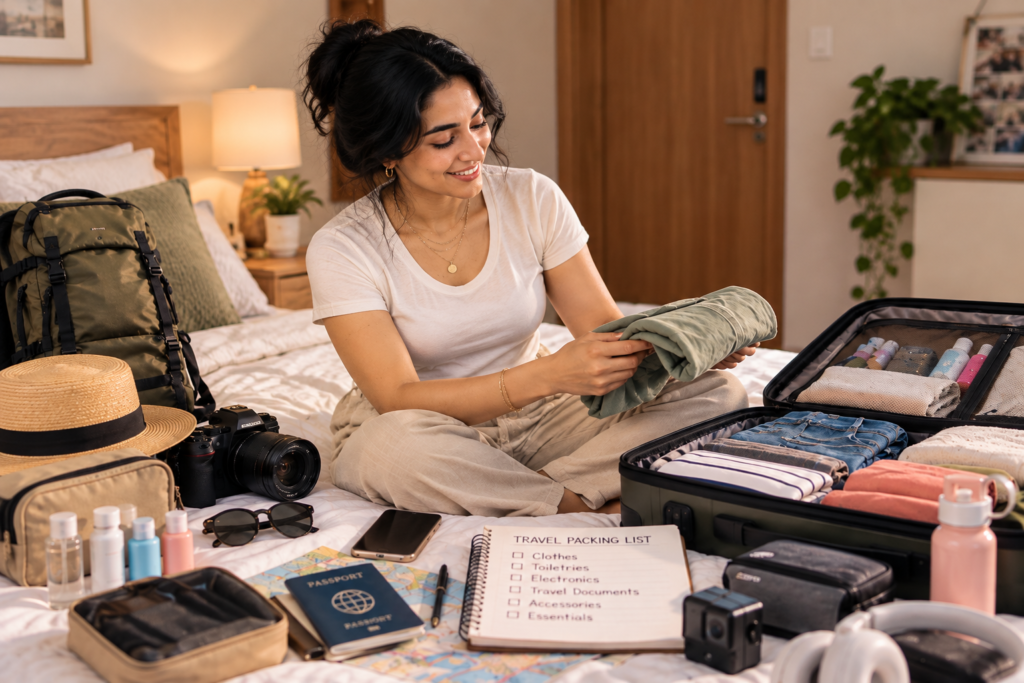
They provide an organized way to separate your travel wardrobe into categories such as t-shirts, trousers, underwear, and electronics.
They are invaluable for solo travelers who may be staying in multiple hotels or visiting several different destinations.
Instead of emptying your entire suitcase in search of one t-shirt, you simply open the appropriate packing cube.
They also make it easier to re-pack your suitcase at the end of each day.
If you are attempting to travel light and only take a carry-on bag, compression packing cubes can help you to save space by compressing your clothing.
Remember that compression is all about volume, not weight.
Keep Your Passport in a Secure Travel Wallet
Keep your passport, credit cards, boarding passes and other important documents in one secure place.
This makes them easier to find whenever you need them.
Slim travel wallets can help you to organize your essential travel documents in an easily accessible and secure manner.
Some solo travelers prefer RFID blocking wallets, whereas others may be happy with a simple zippered travel organizer.
The important thing is to have a consistent system.
Do not keep your passport in different places throughout your trip – this is a sure way to misplace it.
For international travel, make sure to keep digital copies of your passport, visa, insurance, and bookings in a secure cloud service as well.
Bring a Refillable Water Bottle
Solo travel involves a lot of walking, which means you need to make sure you are staying well hydrated, especially if you are sightseeing.
A refillable water bottle is a great piece of solo travel gear that can be used every day of your trip.
It also means you are not constantly having to buy water from local stores.
Some solo travelers prefer an insulated water bottle to keep their drinks cold for longer, whereas others may find a collapsible water bottle more convenient as they only take up space when filled with water.
Whichever you choose, make sure it is easy to clean and carry with you at all times.
When flying, empty your water bottle through airport security and fill it up again at your destination if safe drinking water is available.
Noise-Canceling Headphones Are Worth Considering
Airports, planes, trains, buses, and hostels can be noisy places.
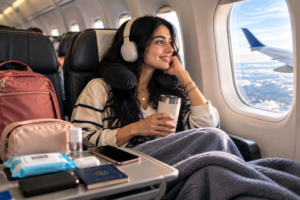
Noise-canceling headphones can make all the difference when it comes to long-haul travel.
They can be used for music, podcasts, movies, phone calls, and blocking out unwanted noise.
If space is an issue, consider noise-isolating earbuds instead of large over-ear headphones.
Noise-canceling headphones may seem like an unnecessary luxury, but for solo travelers, they can provide much-needed comfort during long journeys.
If traveling in hostels, consider bringing along some cheap earplugs as well.
They take up virtually no space in your suitcase and can be invaluable if the person next door decides to practice their snoring skills throughout the night.
A Small Luggage Lock Can Provide Extra Security
A small travel lock can be useful for zipping up suitcases, lockers in hostels, or any other valuables that you may want to keep secure.
If staying in hostels, make sure to find out if they provide lockers and if so, whether you need to bring your own padlock.
Many combination locks are easier to use than key locks, and there is always the risk of losing a tiny key.
Of course, no lock is completely secure, but a small travel lock can be invaluable for solo travelers who want to minimize the risk of theft.
A Compact First Aid Kit Can Be Useful in Emergencies
Solo travelers should always be prepared to deal with minor health issues without the help of friends or family.
A compact first aid kit can contain plasters, antiseptic wipes, painkillers, stomach medicine, antihistamines, and any other medications that you may need.
You do not need to bring an entire pharmacy, but make sure you have the essentials.
If you normally take regular medication, make sure to bring enough for the duration of your trip and keep any particularly important medication in your carry-on bag.
If you are traveling internationally, double check any local regulations regarding prescription drugs.
A Foldable Tote Bag Is Surprisingly Useful
Some travel accessories are so useful that they should be considered essential, and yet they hardly take up any space in your suitcase.
A foldable tote bag can transform from a bag to a beach towel to a laundry bag and back again.
You may find that you need extra space for souvenirs on the way back, and rather than buying a new bag, you simply unfold the tote bag that you already have.
Choose a tote bag that can also be folded into a small pouch so that it can be tucked away inside your suitcase when not in use.
Bring a Small Microfiber Towel
A compact microfiber towel can be incredibly useful even if your hotel or hostel provides towels.
It is much lighter to carry around and will dry much quicker than a regular cotton towel.
Microfiber towels are particularly useful for solo travelers who are staying in hostels, guesthouses, campsites, or other budget accommodations.
They can also be used as beach towels, picnic blankets, and emergency towels if you are caught in the rain.
Always choose a quick-dry microfiber towel so that it is not unpleasant to have to pack a wet towel back into your suitcase.
Consider a Phone Lanyard or Secure Crossbody Strap
Your phone is one of the most important travel accessories you can carry.
It stores travel information, maps, tickets and contactless payment options.
A phone lanyard, wrist strap, or crossbody phone pouch can help to prevent your phone from slipping out of your hand and getting damaged.
It can also make it much easier to access your phone at the same time without having to dig around in your bag.
Of course, nothing is foolproof, and it is still important to remain aware of your surroundings at all times, particularly when using unfamiliar transportation.
An Offline Backup Can Be More Valuable Than Another Travel Essential
Not every travel essential needs to be a physical object.
Before leaving on your trip, make sure to save any important information to your phone.
Offline maps, hotel information, screenshots of bookings, emergency numbers, and a digital copy of your passport and travel insurance can all be useful if you find yourself without an internet connection.
You will be surprised how reliant we have become on technology, and how quickly we can find ourselves in a situation where we need an offline backup.
A few minutes spent doing this before you leave can significantly reduce stress and make you less reliant on Wi-Fi and mobile data.
Consider a Portable Door Lock
Some solo travelers like the added security of a portable door lock to their hotel or hostel room.
These are particularly useful for inward-opening doors as they provide an extra layer of security.
They are small and light, but they are also not foolproof and should not be relied upon entirely.
These door alarms are completely ineffective on outward-opening doors and should never be used on emergency exits.
They should also not be used in accommodations as they can sometimes be a fire hazard.
Think of these as optional extras rather than a necessity and always try to stay in well-rated hostels or other reputable accommodation.
Compare well-reviewed accommodation:
Search hotels and rooms for your trip.
A Travel Laundry Bag Keeps Things Organized
Clean clothes and dirty clothes should always be kept separate throughout your solo travel experience, at least until you are back at your accommodation and ready to wash them.
It prevents clean clothes from becoming dirty and keeps everything organized so that it is easy to locate specific items when you need them.
Water-resistant laundry bags are ideal if you are likely to be carrying damp swimwear or gym clothes.
If you have a longer trip ahead, a few laundry detergent sheets can also be useful.
They are small and light but can make washing clothes much easier, particularly if you only have access to a sink.
A Lightweight Rain Jacket Is Better Than Hoping For Good Weather
No matter how reliable the weather forecast is, there is always the off chance that it will rain on the one day you have planned to go sightseeing.
A lightweight waterproof jacket is much more reliable than hoping for good weather.
Look for something that is packable so that it can easily be stored in your suitcase when not in use.
For warm destinations, a light waterproof jacket is usually more useful than a heavy raincoat.
A small umbrella can also be useful, particularly if you only need it for short periods of time, but jackets are often more convenient if you also have to carry a bag, camera, or other items with you.
Always Carry a Pen
This may seem like the most unnecessary travel essential on this list, but trust us when we say that you will find uses for a pen throughout your solo travel experience.
You may need to write something down, make a note, fill in some paperwork, or even write on your luggage to keep track of anything that has been lost or misplaced.
Carry one in your travel document organizer and you will most likely forget it is even there until the exact moment that you need it.
A Small Travel Tripod Can Help You Take Better Photos
One of the challenges of solo travel is trying to get a good photo of yourself.
You could always ask someone to take your photo, but it is much more convenient to use a small portable smartphone tripod.
Choose a tripod that is compact and lightweight.
A full-sized photography tripod is only necessary if photography is the main focus of your trip.
A bluetooth remote shutter can also be useful for taking photos from a distance.
Always remember to use the tripod in a safe location and never leave your phone unattended in public places.
Bring an E-Reader or Download Entertainment
Sometimes all solo travelers want is to sit back, relax, and enjoy the view.
Flights can be delayed, trains can take too long, and sometimes all you want is a slow evening at the hotel.
An e-reader provides easy access to multiple books without taking up much space in your suitcase.
Alternatively, you could always download books, podcasts, playlists, and movies to your phone or tablet before departure.
Offline entertainment is even more important if you are flying long-haul or traveling on a route where internet data may be limited.
Do Not Turn Solo Travel Essentials Into Overpacking
This is where many lists of solo travel essentials go wrong.
They convince you that every problem you may encounter on a solo trip requires its own specially designed travel accessory.
It does not.
The best solo travel gear is often uncomplicated and keeps things simple.
Your backpack should be comfortable, your phone should be charged, your documents should be secure, you should have water, medicine, and protection from the elements.
Everything else depends on your specific travel needs and destination.
If you can solve a problem with one item, there is no point in buying an entire range.
If you are buying something because a travel vlogger told you it will be useful someday, leave it at home.
A Simple Solo Travel Gear Checklist
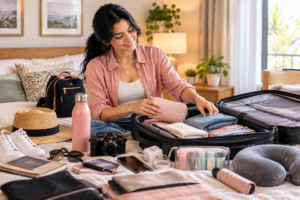
Depending on where you are going and how you are getting there, your solo travel essentials may include a travel backpack, day pack, power bank, charging cable, universal adapter, water bottle, travel wallet, luggage lock, packing cubes, headphones, first aid kit, foldable tote bag, lightweight rain jacket, laundry bag, and travel documents.
Depending on your specific needs, you may want to bring a microfiber towel, phone tripod, e-reader, or portable door lock as well.
The best solo travel gear checklist is not going to be the longest one.
It is going to be the one that has been carefully chosen based on the trip that you are taking.
Good Travel Gear Should Give You More Freedom
Imagine waking up in a new city with your day pack ready to go.
Your phone is fully charged, your water bottle is full, you know where your passport and wallet are, and you do not waste twenty minutes searching through your suitcase looking for them.
That is what good travel gear should be like.
It should practically disappear and make life easier.
It should solve simple problems so that you are not constantly worrying about them.
Solo travel already gives you incredible freedom, and the right travel gear simply makes that freedom easier to enjoy.