
How to Plan a Budget-Friendly Solo Trip
How to Plan a Budget-Friendly Solo Trip Without Missing the Experience
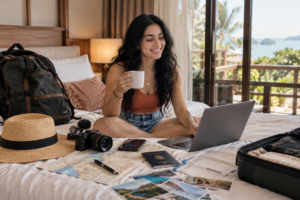
There is something exciting about planning your first solo trip.
No group discussions. No waiting for someone else to decide the destination. No arguments over where to eat or what time to wake up.
Just you, your plan, and the freedom to travel at your own pace.
But there is one concern that stops many people from actually booking the trip:
‘Will travelling alone become too expensive?’
It can, if you plan badly.
Solo travellers do not get to split hotel rooms, taxis or meals with friends, so the cost per person can sometimes be higher. But with the right strategy, a solo trip can still be surprisingly affordable.
The key is not to choose the cheapest option every time. It is knowing where you can save money and where spending a bit more makes your trip easier, safter and more enjoyable.
This guide will show you how to plan a budget-friendly solo trip from the moment you choose your destination until the day you return home.
Before you start building your itinerary, compare your main travel costs.
Compare affordable flights here:
Compare flight prices for your route.
Find budget-friendly hotels and rooms here:
Search budget hotels and rooms for your trip.
once you know approximately what flights and accommodation will cost, the rest of your travel budget becomes much easier to manage.
Start With a Budget, Not a Destination
Most people plan a trip backward.
They fall in love with a destination, start looking at hotels, discover expensive flights, and then try to force the entire trip into a budget that was never realistic.
A better approach is to decide how much you are comfortable with spending first.
Imagine you have set aside a fixed amount for a 5-day or 7-day solo holiday.
Instead of immediately deciding on a destination, break that budget into major categories such as ‘transportation,’ ‘accommodation,’ ‘food,’ ‘local transport,’ ‘sightseeing,’ ‘shopping,’ and ’emergency fund.’
this simple step changes the way you plan.
Instead of ‘how can I afford this destination?’, you begin asking ‘which destination provides the best experience within this budget ?’
That question usually leads to a much better trip.
Choose a Destination Where Your Money Goes Further
Some destinations are naturally easier for budget travellers than others.
A cheap flight does not automatically mean a cheap holiday.
You may find a fantastic flight deal and later discover that hotels, food, taxis and attractions at your destination regularly cost much more than you expected.
That is why it is important to compare the overall daily cost, not just airfare. Look at average accommodation rates, public transportation prices, restaurant costs, attraction fees and general mobility expenses.
Sometimes paying a bit more for a flight to a cheaper local destination can save you much more money over the course of a trip.
For destination travel, solo travellers often find hostels, well-connected cities with public transport, budget guesthouses and free activities particularly useful.
Be Flexible With Your Travel Dates
One of the easiest ways to reduce travel costs is also one of the easiest adjustments to make.
Change your dates.
Airfare and hotel prices can fluctuate considerably depending on the time of the year, weekday, public holidays or special events.
Travelling a few days earlier or later may save you a considerable amount of money.
If your schedule allows it, avoiding peak season is usually best.
Shoulder season can be a wonderful time to visit many destinations as well, since crowds tend to be smaller and hotel rates are often lower than peak season.
When searching for flights, compare several nearby dates rather than lock in one departure day.
Search flexible flight dates here:
Compare flight prices for your route.
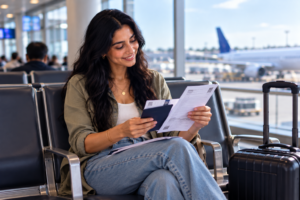
Book Flights at the Right Time
A budget solo trip can become expensive very quickly if you overpay for your flight.
Start watching prices as soon as you have a destination and travel window in mind.
Compare several airlines and see whether cheaper ticket prices include taxes or additional baggage charges.
A seemingly low ticket price can become considerably more expensive after adding checked luggage, seat preferences, meals and other airport fees.
If your destination is short enough, limiting yourself to just a ‘carry-on bag’ can reduce additional expenses while also reducing overall weight during transport.
Solo travel often means solo transport, so anything that reduces waiting time at airports while also reducing weight in terminals or on buses/trains is usually worthwhile.
Do not make strange connections simply to save a small amount of money.
Saving money is good, but there is usually no value in making life difficult for yourself for the sake of an airline fare.
Choose Accommodation Based on Location, Not Just Price
This is probably one of the most common budget mistakes.
Imagine finding a wonderful (and very cheap) hotel that turns out to be in the middle of nowhere.
Every day of your holiday involves expensive taxi fares or time-wasting commutes just to get to the interesting parts of the city.
Cheaper rates do not always mean better rates when hidden location costs are involved.
For solo travel, finding transport-friendly accommodation close to food stores, restaurants, bars, and your main sightseeing destinations is particularly important.
Hostels can be a fantastic option for many solo travellers, since they usually offer good value for money, free breakfast/meal plans and the opportunity to meet new people.
Many hostels also have private rooms you can rent for greater solitude. Guesthouses, serviced apartments, budget hotels and homestays are other good options to consider.
Compare affordable local accommodation here:
Click Here to book your Stay.
Before making a reservation, always take the time to read recent guest reviews and ensure the overall location, transport access and any additional taxes are acceptable.
Save Money on Food Without Missing Local Cuisine
Foods are one of the most wonderful parts of any travel experience.
A budget trip is not a famine trip, so think carefully about how you are spending your food budget.
Instead of eating out at major tourist spots, look for cheap local eats such as street food markets, family bakeries and supermarkets that sell sandwiches or breakfast items.
If your accommodation includes a morning meal, take advantage of it. An inexpensive breakfast can keep you full for several hours, reducing cravings for snacks and additional expenses.
visiting a local supermarket or bakery can also be a good option, depending on the destination. Buying simple meals, fruits and drinks is often a much better value than eating out at restaurants or cafes.
Many solo travellers find a good balance by keeping breakfast/lunch modest and treating themselves to a more interesting dinner. This allows them to try local cuisine without breaking their daily food budget.
Use Public Transportation Whenever Possible
Taxis are usually convenient transportation options, but they are also one of the fastest ways to drain your travel budget.
Before arriving at your destination, research the local public transportation system.
Look into metro trains, buses, trams, local train systems or general daily passes. A ‘daily travel pass’ for buses and trains is usually much cheaper than buying individual tickets for every trip.
Sometimes, simply walking from one attraction or restaurant to another can be faster and more interesting than taking a bus or train.
For transferring between destinations or arriving at the airport, compare public transportation options with taxi fares whenever possible.
A train or airport shuttle can often be much cheaper than a private taxi ride.
Build Your Itinerary Around Nearby Attractions
A poorly planned itinerary creates many hidden expenses while also wasting valuable time.
It is easy to imagine visiting one attraction in the north of a city during the morning, crossing the city for lunch, and then returning to the north during the afternoon to see another attraction.
By avoiding these long-distance movements within your own destination, you not only save money but also create a much more interesting itinerary with fewer exhausting commutes between sights.
A general rule of thumb is to organize your attractions geographically.
Choose one area/section of your destination and visit the sights listed there on the same day.
This reduces overall transportation costs while allowing you to discover new bars, restaurants, streets, and activities you may have overlooked when rushing between different parts of the city.
Look for Free Things to Do
Some of the best parts of any travel experience cost nothing at all!
Taking long walks throughout old town, visiting museums with free entry days, seeing the sunset from a hill or beach, observing interesting architecture and exploring different neighbourhoods are all wonderful activities that often involve little to no cost.
Many museums and attractions have special discount days, so it is always worth double-checking this information before your travel date.
Balance your list of activities between paid and unpaid attractions, using the free options as breaks between more expensive ones.
This ensures that your money is spent on experiences that matter most to you, rather than random tourist attractions simply because they appear on a recommended list.
Avoid Trying to See Everything
This is especially important when travelling alone, since you are completely in control of your itinerary.
You can try to squeeze in as many attractions as possible, but this can often create an exhausting and unnecessarily expensive travel schedule that causes you to skip the most interesting experiences due to tiredness.
Choose a few memorable activities and leave some open days for relaxation or spontaneous adventures.
Maybe you find a delightful new cafe and decide to sit and watch the world go by. Or perhaps you meet interesting local travellers who invite you to join them on a special adventure later in the week.
Travel with a solo itinerary means you always have the option to do new things, but only if you create space in your schedule for them.
Travel With a Refillable Water Bottle
This suggestion may seem a bit extreme, but many small expenses add up very quickly on any travel budget.
Bottled water tends to be extremely expensive at most airports and popular attractions, especially if you visit multiple destinations during the same trip.
A simple refillable water bottle often ends up being much cheaper and more environmentally friendly than buying dozens of small plastic water bottles.
The same suggestion applies to small snacks.
Keeping a few bags of small snacks in your day bag makes it possible to avoid expensive airports and restaurants when you are simply hungry.
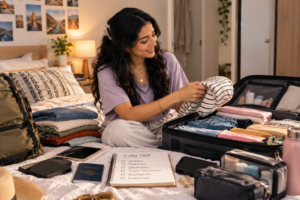
Pack Light to Avoid Extra Costs
Travelling light has a major advantage when you are travelling on your own, since there are no other people to carry your bags.
Pack a minimalist wardrobe as much as possible, without duplicating clothing that can be worn in different ways.
For a one-week trip, you definitely do not need seven completely different outfits. Mix-and-match clothing helps you get by with much less luggage while still looking neat and clean.
When using trains or buses, a small suitcase or backpack is always more convenient than trying to fit a large carry-on bag within the limited luggage space.
You will also spend less time worrying about your trolleys and bags when you carry only a small day bag and/or a compact backpack.
Set a Daily Spending Limit
Your overall travel budget becomes much easier to manage when you convert it into daily amounts.
Suppose we already paid for our flights and accommodation. Let’s say the remainder of our travel budget would normally buy us daily meals, local transportation, entrance fees to museums and a few other small treats.
We do not have to stick strictly to the number, because some days will inevitably cost more money than others.
But knowing we approximately have £100 to spend during each day of our travels keeps us aware of our spending limits.
You can set aside a portion of your travel budget in a separate credit card or bank account so it is easier to keep track of your daily expenses.
Keep an Emergency Fund
Never plan a trip where you have already spent your entire budget.
Unplanned expenses are always a possibility when you are travelling.
A bus or train may be cancelled unexpectedly, you may need an extra night at a hotel or you could lose something valuable and need to replace it.
It is always wise to keep a small amount of money in your pocket as an emergency fund.
Treat this fund as a true emergency savings fund rather than regular spending money, and hopefully, you will never need to use it.
Do Not Sacrifice Safety Just to Save Money
The terms ‘budget travel’ and ‘cheapest travel’ are not always entirely synonymous.
Suppose we chose an interesting but very cheap hotel based on low nightly rates.
The cheapest option might also have the farthest parking access, the most dangerous surrounding area and the worst reputation of any hotel in that price range.
The same general rule applies to late-night transport. If walking 30 minutes to a restaurant sounds fun during the day, it suddenly becomes less enjoyable after midnight.
When travelling alone, good judgement about risks and rewards is more important than ever.
Expenditures should be reduced whenever it makes a noticeable difference to your overall travel experience.
It is important to travel safely and comfortably, particularly when alone and far from familiar surroundings.
Therefore, spend extra money on a taxi instead of risking a potentially dangerous night out.
Spend more money on quality accommodation instead of putting your personal safety at risk.
Make Technology Work for Your Budget
Your cell phone can be one the best travel companions during a solo trip, but only if you set it up correctly ahead of time.
Use map applications to plan interesting walking routes to attractions.
Save hotel addresses as favicons so you can easily find them in your phone.
Use currency converter apps to understand daily pricing.
Always keep electronic copies of your reservations, tickets or other travel documents.
Download public transport apps for the cities you will be visiting.
You can also use mobile data or local mobile packages to download maps before exploring new cities.
Before departing for any international destination, compare cell phone plan costs with local SIM card providers.
A few minutes of research now can prevent thousands of dollars in cell phone charges later.
Give Yourself Permission to Spend on One Great Experience
A good budget travel tip usually does not suggest you completely eliminate expensive activities.
Consider why we chose to visit that particular destination in the first place.
Perhaps there is a special restaurant, tour, concert, local attraction, diving experience, luxury hotel stay, scenic train route or another memorable activity we wish to include in our travels.
By consciously budgeting funds toward that specific experience, we create much stronger travel memories.
At the same time, we save money in other areas so the chosen experience is not financially overwhelming.
That is essentially what makes a good budget travel as opposed to the cheapest travel.
You do not sacrifice quality experiences simply because you paid for a cheaper hotel room or bus ticket.
Your trip remains enjoyable without going over your head in debt.
Your Simple Budget-Friendly Solo Trip Checklist
Before booking anything, decide your overall budget and check the approximate cost of flights, accommodation, local transportation, food, and activities.
Choose flexible travel dates where possible.
Compare several accommodation options based on both price and location.
Plan your day according to area to avoid transportation expenses.
Mix restaurants with less expensive local eateries, street food and supermarket meals.
Pack light items and use public transportation.
Find free attractions and a mix of priced activities.
Set a reasonable daily spending limit and always keep an emergency fund.
Most of all avoid turning saving money into the main purpose of your trip.
The whole point of travel, after all, should still simply be travel.
The Best Part of Solo Travel Cannot Be Bought
On your first morning alone in a new destination, you awake to something wonderful.
There is nobody asking what you want to do today.
Nobody is rushing you to arrive somewhere by a specific time.
Nobody is disappointed that you are not interested in the museum they wanted to see.
You simply decide what you wish to do with your day – wherever that might be.
Maybe you stroll the streets of the new city without any particular destination in mind. Perhaps you sit in a quiet restaurant and watch the world go by. Maybe you meet new people who inspire you to change your plans entirely for the following day.
That is what solo travel is all about. A self-planned trip provides much more flexibility and freedom, allowing us to spend more time doing the things we enjoy most without worrying about others’ demands or schedules.
A considered budget simply means more freedom to enjoy that flexibility.
You do not have to be rich to enjoy the many advantages of solo travel, but it will always help to be smart about your expenditures.
When you are ready to start planning your own exciting adventure:
Compare flights for your solo trip here:
Compare flight prices for your route.
Find affordable hotels, hostels and rooms here:
Search budget hotels and rooms for your trip.
Your next adventure just may be more affordable than you think.