
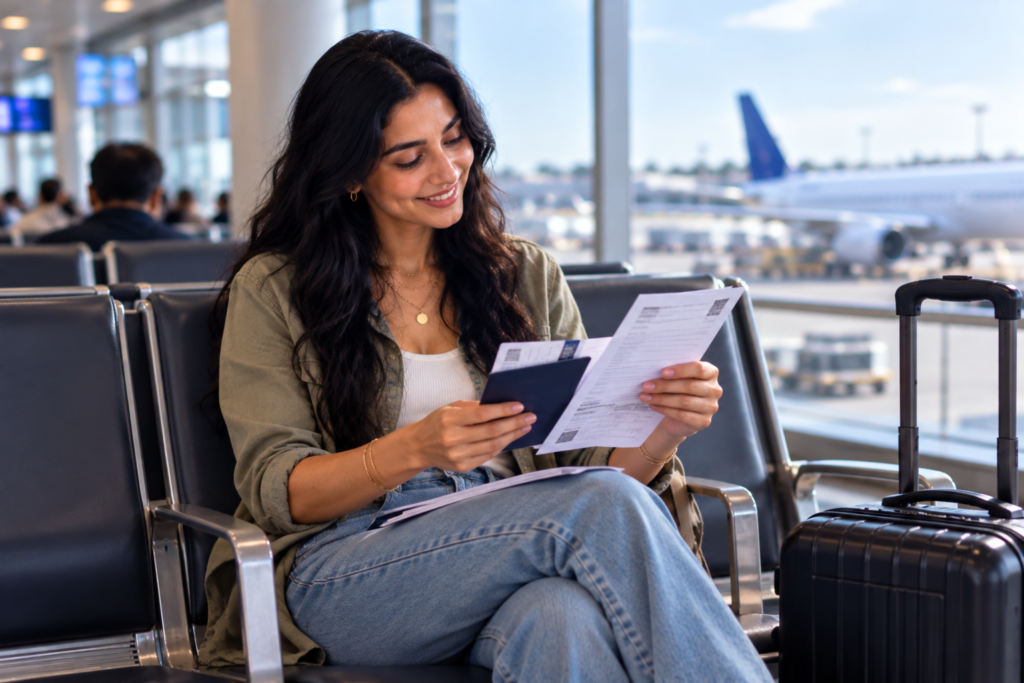
Travel Documents Checklist Before an International Trip
Everything You Should Check Before You Fly
There is a particular thrill that comes from making international travel arrangements.
You book the flight, the hotel, start considering which outfit you should wear, save a restaurant for later on your phone, and imagine yourself arriving in your destination country.
Then comes a thought in the days leading up to the trip:
Do I have all the documents I need?
It is a vital reminder that the biggest risks to an international travel itinerary are those that are impossible to fix or take time and money to resolve.
A forgotten T-shirt here or a faulty phone charger there can be replaced.
A hotel can be cancelled and rescheduled.
But an overlooked or forgotten travel document can halt an impending journey completely and throw a spanner in the works.
That is why you should think about travel documents first before you start worrying about which toiletries to put in your suitcase.
As an international journey approaches prepare your travel documents using this travel documents checklist to make sure that the necessary pieces of the puzzle are in place before you leave home.
Before preparing the documents you may want to cross-check your key travel bookings:
If you haven’t booked yet, you can compare international flights and search hotels and apartments before you start on the paperwork.
Now that the flight and accommodation are booked it is time to prepare the documents that will actually get you there.
Start With Your Passport
Your passport is essential for most international journeys.
While it is important to have a passport at all, a second look should be taken at the expiry date on it.
Many destinations require the passport you intend to travel with to be valid beyond your date of arrival and/or departure.
A passport that is technically still valid but does not meet the requirements of your destination may cause you issues.
It is always best to get this checked early in the process.
If your passport needs to be renewed it will take time and if it is left until the week before your trip it can turn an exciting adventure into a race against time.
Also double check that there are enough blank pages in the passport for the destination’s entry or visa stamp.
Before any travel begins take a digital photo copy of the passport page and save it somewhere secure, it may be needed at any point.
As an extra precaution keep a paper photocopy separate from the original passport.
Check Whether You Need a Visa
Your next concern should be whether or not you need a visa to enter your destination.
Visa requirements vary depending on your nationality, destination and the length of your intended stay.
Some travellers are eligible for visa exemptions.
Some require an electronic travel authorization, eVisa, visa on arrival, or a pre-approval for a visa depending on the region and country of entry.
Never assume that requirements are the same because your friend travelled there without one.
Entry requirements can vary depending on your passport nationality and may change.
It is best to check the official immigration or embassy website of your destination before booking any non-refundable travel arrangements where possible.
If a visa is required before departure, check:
How early you can apply
How long processing usually takes
What supporting documents are required
Whether an interview or appointment is needed
If the visa must be printed
After a successful application, keep a copy of the visa approval with your travel documents.
Keep Your Flight Booking Confirmation Ready
Your airline ticket is not only proof that you are booked on a flight.
Immigration authorities may at times request evidence of your planned arrival and/or departure details.
Keep your flight booking confirmation handy on your phone and a printed copy (if practical) with you at all times.
Double-check that the name on your booking matches your passport.
Even small spelling differences can be an issue.
If you find a difference contact the airline or booking agent to make the change prior to your travel date instead of waiting at the airport.
Compare international flight options:
Compare international flight prices for your route.
Keep Your Hotel or Accommodation Confirmation
In some cases you may also be asked where you are staying.
Keep the address and confirmation for your first hotel, apartment, guesthouse, or other accommodation handy.
You may find that it is always useful to have it with you.
It may be used in airport transfers, at immigration, for taxi drivers, local registration, or in the case of an emergency.
It is a good idea to save the booking confirmation offline on your phone so that it is accessible even without internet access.
If you are staying with family or friends keep their address and contact details handy.
Find and compare accommodation:
Search hotels, apartments and guesthouses for your trip.
Check Whether You Need Travel Insurance Documents
Travel insurance is often overlooked until it is needed.
Its value often shines in situations that should not happen.
Medical emergencies, cancelled flights, delayed luggage, and unforeseen complications can incur significant fees when overseas.
If you have purchased travel insurance remember to keep your policy number and emergency contact details easily accessible.
Remember to save a digital copy of the policy and double check what it covers.
Not all travel insurance policies are the same and coverage can extend to things like medical treatment, trip cancellations, lost baggage, adventure sports, rental vehicles, and pre-existing conditions.
If your destination requires proof of travel or medical insurance for entry, confirm the required details before departure.
Prepare Proof of Funds if Required
Some countries may require proof of funds to ensure that a visitor has sufficient funds to support themselves whilst in the country.
This does not mean every visitor will be asked.
But if your destination requires proof of funds be prepared.
This may include showing bank statements, credit cards, cash, or other financial documents.
Check the destination’s official entry rules to see whether this applies to you.
Avoid carrying unnecessary sensitive financial documents if they are not required.
Keep Your Return or Onward Ticket Information
Some destinations or airlines may require proof that you will be departing the country within the permitted period.
This is typically shown by a return flight or onward ticket.
Even if the airline already has this information, keeping the confirmation readily available can save time if you are asked.
Make sure your onward travel date is in line with the permitted length of stay under your visa or entry conditions.
Check Health and Vaccination Requirements
Depending on your point of origin and destination, certain health documents may be required for entry.
This can include proof of vaccination or other health-related documentation.
Requirements vary significantly by destination and are subject to change.
Check official government and health authority guidance before your trip.
Do not rely on out-of-date blogs, social media posts, or your experience in a previous trip.
If you require a vaccination certificate or other health document make sure you keep the original and a digital copy where appropriate.
Carry Your Travel Insurance Emergency Details Separately
Imagine losing your phone whilst overseas.
If your insurance policy and emergency contact details are only on that phone it suddenly becomes much harder to access them.
Write down or print the policy number, emergency helpline, insurer name, and key contact information.
Keep it on a separate location from your phone.
This simple preparation can be surprisingly helpful in the event of an emergency.
Bring Your Driving Licence if You Plan to Drive
If you plan to rent or drive a vehicle abroad, check the local licence requirements before leaving home.
Your domestic driving licence may be sufficient, or an International Driving Permit or additional documentation may be required.
Rental companies may also have their own requirements.
Check relevant requirements before booking the vehicle.
Do not assume a domestic licence will be sufficient solely because the booking website allows you to do so.
Keep Copies of Important Documents
One of the best travel habits you can adopt is creating the necessary backups.
Make sure you have secure copies of:
Passport information page
Visa or travel authorization
Flight bookings
Hotel confirmations
Travel insurance
Driving licence
Important medical documents
Emergency contacts
Save copies in more than one secure place.
For example you could keep one set on your phone, another in secure cloud storage, and one printed copy inside your luggage.
Avoid putting all copies in one bag.
If that bag is lost, backups are lost with it.
Check the Names on Every Booking
It is one of the easiest mistakes to make.
Compare the name on your passport with the name on your airline ticket, visa, hotel booking, and other important reservations.
Do not assume a nickname or shortened version will always be acceptable.
Your airline booking should match your passport details as required by the carrier.
If you notice an error, fix it before departure.
The airport is a poor time to find out your booking details do not match your travel document.
Keep Emergency Contact Information
International travel is usually enjoyable, but it is always useful to be prepared for the unexpected.
Keep contact information for:
Your accommodation
Your airline
Travel insurance provider
Your bank
A family member or trusted contact
Your country’s embassy or consulate at the destination
Save them digitally and offline.
If your phone runs out of battery or is lost, you should still be able to access the most important numbers.
Keep Copies of Prescription Information
If you require regular medication, carry enough for your trip and check relevant rules for bringing that medication into your destination country.
Some medicines that are commonly available in one country may be controlled in another.
Keep prescription documents or a doctor’s letter if necessary.
Try to keep medications in their original labelled packaging.
Do not pack essential medication only in checked baggage.
Keep enough with you in your carry-on in case your checked bag is delayed.
Download Important Documents for Offline Access
Travel often involves moments when mobile data is unavailable.
Airport Wi-Fi may be slow.
Your SIM might not work immediately.
A booking app may refuse to open at exactly the wrong moment.
Before leaving home, download your essential confirmations.
Save your boarding information, hotel booking, visa, insurance details, and other documents so that they can be opened without an internet connection.
Screenshots can also be useful for simple booking details, although they should not replace official documents where originals are required.
Check Entry and Transit Requirements
Your final destination is not the only country that matters.
If your journey includes a stopover or transit through another country, check whether there are separate transit requirements.
Some travellers may require a transit visa depending on their nationality, airport, route and if they need to leave the international transit area.
Do not assume that staying inside the airport means all visa requirements are lifted.
Check before booking complicated multi-stop flights.
Review Customs Rules Before You Pack
Travel documents get you through immigration.
Your luggage still has to pass through customs.
Countries can restrict certain foods, plants, medicines, cash amounts, animal products, electronics, and other goods.
Check customs rules before packing anything unusual.
If you are required to declare an item, follow the declaration process rather than hoping it will not be noticed.
A few minutes of research before departure can stop a much bigger problem when you arrive.
Keep Important Documents in Your Carry-On
Never place your passport, visa, medication documents, insurance information, money, or other irreplaceable documents in checked luggage.
Your checked bag may be delayed.
It may travel on a different aircraft.
It may even be lost.
Keep critical documents in a secure section of your carry-on or personal bag.
You should be able to reach your passport and boarding documents easily during the airport journey without constantly unpacking your bag.
Do a Final Document Check the Night Before
The night before an international trip, there is always a temptation to keep packing.
Instead, stop.
Take five minutes and check the things that actually matter.
Passport.
Visa.
Flight confirmation.
Accommodation.
Insurance.
Payment cards.
Medication.
Driving documents if needed.
Health documents if required.
Emergency contacts.
If those are ready most other problems can be solved.
A Simple International Travel Documents Checklist
Before leaving for the airport, make sure you have your passport, required visa or travel authorization, flight confirmation, hotel booking, travel insurance details, return or onward ticket, required health documents, payment methods, driving documents if necessary, prescription paperwork, and emergency contact information.
Also keep digital backups of your most important documents.
The exact documents you need will depend on your nationality, destination, route, length of stay, and reason for travelling.
Always check current official entry rules before departure.
The Best Trips Usually Begin With Good Preparation
Travel is full of unexpected moments.
That is part of what makes it exciting.
Maybe you discover a hidden café.
Maybe you meet someone interesting.
Maybe you change your itinerary halfway through the trip.
Those are the surprises you want.
Realizing at the airport that your passport expires too soon is not.
A good travel documents checklist does not remove the adventure from travelling, it removes the unnecessary stress.
Prepare the important paperwork first, keep secure backups, check the latest entry rules, then focus on the part of travelling that you actually came for.
The experience.
When you are ready to plan your journey:
Compare international flights:
Compare international flight prices for your route.
Find hotels, apartments and rooms:
Search hotels, apartments and guesthouses for your trip.